






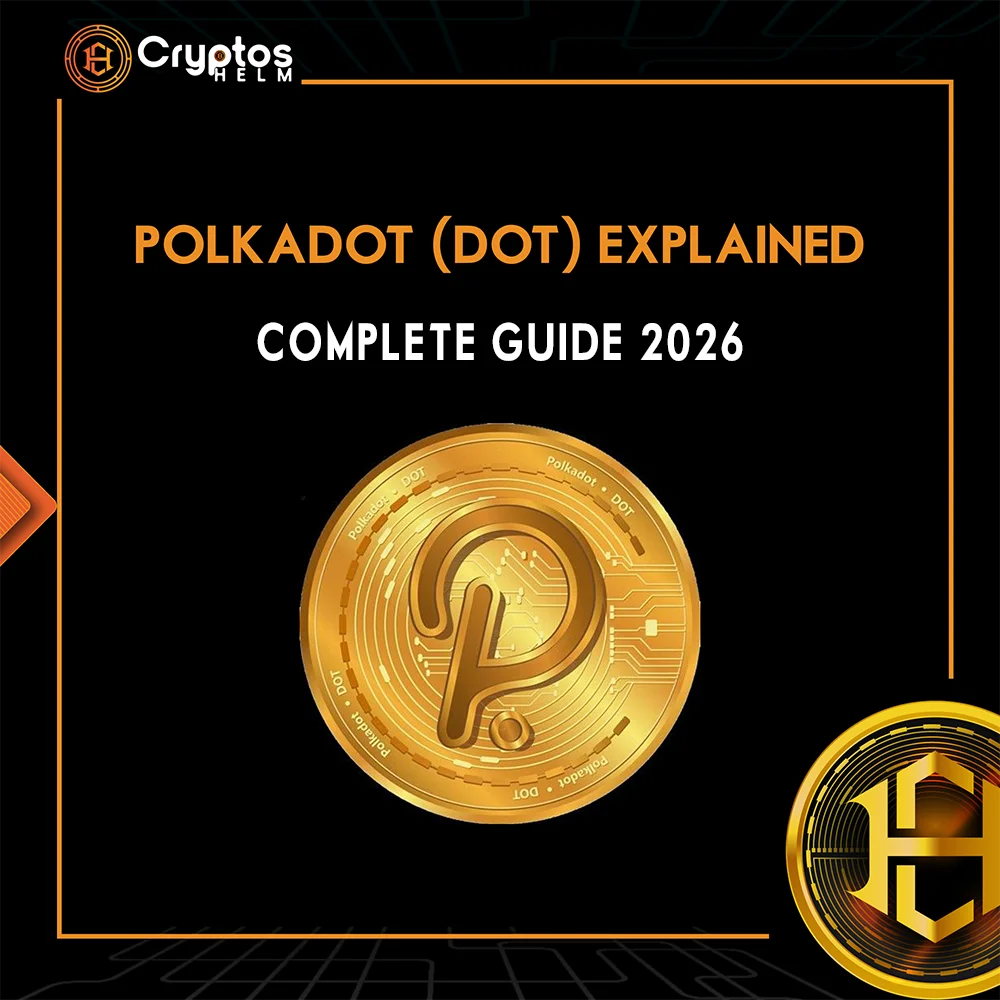
The blockchain industry has witnessed tremendous growth over the past decade, but one persistent challenge remains: different blockchains can’t communicate with each other effectively. This is where Polkadot enters the picture.
Polkadot (DOT) is a next-generation blockchain protocol that enables different blockchains to transfer messages and value in a trust-free fashion. Founded by Dr. Gavin Wood, co-founder of Ethereum, Polkadot aims to create a fully decentralized web where users control their own data and digital assets.
In this comprehensive guide, we’ll explore everything you need to know about Polkadot in 2026.
What is Polkadot?
Polkadot is a multi-chain blockchain platform designed to enable different blockchains to interoperate seamlessly. Think of it as a “blockchain of blockchains” that allows independent chains to exchange information and transactions securely.
Unlike traditional blockchain networks that operate in isolation, Polkadot creates an ecosystem where specialized blockchains can work together while maintaining their unique features and governance structures.
Key Features of Polkadot
Interoperability Polkadot’s primary innovation is its ability to connect different blockchains. This means Bitcoin, Ethereum, and other networks can communicate through Polkadot’s infrastructure.
Scalability By processing transactions across multiple parallel blockchains (parachains), Polkadot can handle significantly more transactions than traditional single-chain networks.
Shared Security All connected parachains benefit from Polkadot’s collective security model, eliminating the need for each chain to establish its own validator set.
Customizability Developers can create application-specific blockchains tailored to their exact requirements using Polkadot’s Substrate framework.
How Does Polkadot Work?
Understanding Polkadot’s architecture is crucial to appreciating its revolutionary approach to blockchain technology.
The Relay Chain
The Relay Chain is Polkadot’s heart and main blockchain. It’s responsible for the network’s security, consensus, and cross-chain interoperability. The Relay Chain has minimal functionality by design, focusing primarily on coordinating the system as a whole.
Parachains
Parachains are independent blockchains that run parallel to the Relay Chain. Each parachain can have its own tokens, governance, and optimized functionality for specific use cases like DeFi, gaming, or identity management.
Projects must win a parachain slot through auction to connect to Polkadot. These slots are leased for specific periods, typically 96 weeks.
Parathreads
Parathreads offer a more flexible alternative to parachains. Instead of leasing a continuous connection, parathreads operate on a pay-as-you-go model, making them ideal for blockchains that don’t need constant connectivity.
Bridges
Bridges enable Polkadot to connect with external networks like Bitcoin and Ethereum. This allows assets and data to move between Polkadot and other major blockchain ecosystems.
DOT Token: Uses and Functions
The DOT token serves three primary functions within the Polkadot ecosystem:
Governance
DOT holders have complete control over the protocol. They can determine network fees, approve or reject protocol upgrades, and decide on parachain additions or removals.
Unlike many cryptocurrencies where developers make key decisions, Polkadot’s governance is entirely community-driven.
Staking
DOT tokens can be staked to secure the network. Validators stake DOT to validate transactions and produce new blocks, earning rewards for their service.
Nominators can also stake their DOT by selecting trustworthy validators, sharing in the rewards while contributing to network security.
Bonding
When projects want to add new parachains to the network, DOT tokens must be bonded. This bonding process ensures that only legitimate projects with community support can connect to Polkadot.
Polkadot vs Ethereum: Key Differences
Many investors compare Polkadot to Ethereum, and for good reason. Both platforms support smart contracts and decentralized applications, but they approach blockchain technology differently.
Architecture
Ethereum operates as a single blockchain where all transactions compete for the same resources. Polkadot’s multi-chain architecture distributes workload across multiple parachains, significantly improving scalability.
Consensus Mechanism
Ethereum 2.0 uses Proof of Stake, as does Polkadot. However, Polkadot’s Nominated Proof of Stake (NPoS) allows more users to participate in consensus without running validator nodes.
Interoperability
While Ethereum relies on third-party bridges for cross-chain communication, Polkadot has native interoperability built into its core design.
Upgrade Process
Polkadot can upgrade without hard forks through its on-chain governance system. Ethereum typically requires coordinated hard forks for major upgrades.
How to Buy and Store Polkadot (DOT)
Getting started with Polkadot is straightforward, even for cryptocurrency beginners.
Buying DOT
DOT tokens are available on major cryptocurrency exchanges including:
- Binance
- Coinbase
- Kraken
- KuCoin
To purchase DOT, you’ll need to:
- Create an account on a supported exchange
- Complete identity verification (KYC)
- Deposit funds (fiat or cryptocurrency)
- Purchase DOT tokens
Storing DOT Safely
After purchasing, move your DOT to a secure wallet rather than leaving it on the exchange.
Hardware Wallets Ledger and Trezor offer the highest security for long-term DOT storage. These physical devices keep your private keys offline.
Software Wallets Polkadot.js wallet provides a user-friendly interface for managing DOT and participating in staking and governance.
Mobile Wallets Apps like Nova Wallet and SubWallet offer convenient access to your DOT holdings on mobile devices.
Polkadot Staking: Earning Passive Income
Staking DOT is one of the most popular ways to earn passive income in the crypto space.
Staking Rewards
Current staking rewards on Polkadot range from 10-15% annually, though rates fluctuate based on total amount staked and network inflation.
How to Stake DOT
You can stake DOT as either a validator or nominator. Most users choose the nominator role, which doesn’t require technical expertise or maintaining server infrastructure.
Steps to Stake:
- Transfer DOT to a staking-compatible wallet
- Navigate to the staking section
- Select trustworthy validators (up to 16)
- Bond your DOT tokens
- Start earning rewards
Staking Risks
Be aware that bonded tokens have a 28-day unbonding period, validator misbehavior can result in slashing, and rewards fluctuate with network conditions.
Polkadot Price Prediction 2026
While predicting cryptocurrency prices is inherently speculative, several factors could influence DOT’s value in 2026.
Positive Factors
Growing Adoption As more projects launch parachains, demand for DOT tokens will likely increase for bonding and governance.
Institutional Interest Major financial institutions are exploring Polkadot for building enterprise blockchain solutions.
Technical Developments Upcoming features like asynchronous backing and elastic scaling could significantly improve network performance.
Challenges
Polkadot faces competition from Ethereum and Cosmos, while regulatory uncertainty could impact adoption and price.
Analyst Perspectives
According to various crypto analysts, DOT could trade between $15-$50 in 2026, depending on market conditions and network growth. However, always conduct your own research before making investment decisions.
Polkadot Ecosystem: Notable Projects
The Polkadot ecosystem has grown substantially, with hundreds of projects building on the network.
Moonbeam
Moonbeam is an Ethereum-compatible smart contract platform that allows developers to deploy Ethereum applications on Polkadot with minimal changes.
Acala
Acala serves as Polkadot’s DeFi hub, offering a decentralized stablecoin, DEX, and liquid staking derivatives.
Astar
Astar supports both EVM and WebAssembly smart contracts, making it a versatile platform for developers.
Phala Network
Phala provides confidential computing for blockchain applications, enabling privacy-preserving smart contracts.
Advantages of Polkadot
Polkadot offers native cross-chain messaging without trust assumptions, uses energy-efficient Nominated Proof of Stake, provides developer-friendly tools through Substrate framework, and enables genuine community control through on-chain governance.
Disadvantages and Risks
Polkadot’s complex architecture can be challenging for newcomers, limited parachain slots create intense competition, and critics note governance centralization concerns. Like all blockchain platforms, it faces potential smart contract vulnerabilities and protocol risks.
The Future of Polkadot
Looking ahead, Polkadot’s roadmap includes several exciting developments.
Polkadot 2.0
The next major upgrade will introduce features like:
- Asynchronous backing for faster block times
- Elastic scaling for dynamic resource allocation
- Improved cross-chain messaging
Enterprise Adoption
More traditional businesses are exploring Polkadot for supply chain management, identity verification, and financial services.
DeFi Expansion
The Polkadot DeFi ecosystem continues growing with new protocols for lending, derivatives, and asset management.
Frequently Asked Questions (FAQs)
What is Polkadot in simple terms?
Polkadot is a blockchain network that connects other blockchains, allowing them to communicate and share information securely. Think of it as a bridge system that lets different blockchain networks work together rather than operating in isolation.
Is Polkadot a good investment in 2026?
Polkadot shows strong fundamentals with growing adoption, innovative technology, and active development. However, cryptocurrency investments are volatile and risky. Success depends on continued network growth, market conditions, and regulatory developments. Always invest responsibly and diversify your portfolio.
How is Polkadot different from Bitcoin?
Bitcoin is a digital currency focused on peer-to-peer payments and store of value. Polkadot is a multi-chain platform enabling blockchain interoperability and supporting smart contracts. Bitcoin uses Proof of Work; Polkadot uses Nominated Proof of Stake. They serve different purposes in the crypto ecosystem.
Can I stake Polkadot?
Yes, you can stake DOT tokens to earn rewards, currently ranging from 10-15% annually. You can stake as a validator (requires technical knowledge) or nominator (easier for beginners). Staking helps secure the network and gives you voting rights in governance decisions.
What are Polkadot parachains?
Parachains are independent blockchains that connect to Polkadot’s Relay Chain. Each parachain can have custom features and governance while benefiting from Polkadot’s shared security. Projects acquire parachain slots through auctions, leasing them for typically 96 weeks.
Where can I buy Polkadot DOT?
You can purchase DOT on major cryptocurrency exchanges including Binance, Coinbase, Kraken, and KuCoin. After buying, transfer your DOT to a secure wallet like Ledger hardware wallet, Polkadot.js, or mobile wallets like Nova Wallet for safekeeping and staking.
Conclusion
Polkadot represents a bold vision for the future of blockchain technology. By enabling different blockchains to communicate and share security, it addresses fundamental limitations that have held back blockchain adoption.
Whether you’re a developer building the next generation of decentralized applications, an investor seeking portfolio diversification, or simply someone interested in blockchain technology, Polkadot offers compelling advantages worth considering.
As we move through 2026, Polkadot’s role in the broader cryptocurrency ecosystem will likely continue expanding. Its unique approach to interoperability, combined with strong developer tools and community governance, positions it as a major player in the multi-chain future of Web3.
Remember, cryptocurrency investments carry risk, and you should never invest more than you can afford to lose. Always do your own research and consider consulting with a financial advisor before making investment decisions.
Stay Updated on Polkadot
Follow CryptosHelm for latest Polkadot analysis, development updates, and cryptocurrency market insights! We track ecosystem growth, technical progress, and investment implications.
Visit CryptosHelm.com for expert crypto reviews and investment guidance!
Disclaimer: This article is for informational purposes only and should not be considered financial advice. Cryptocurrency investments carry significant risk. Always conduct your own research and consult with financial professionals before making investment decisions.