
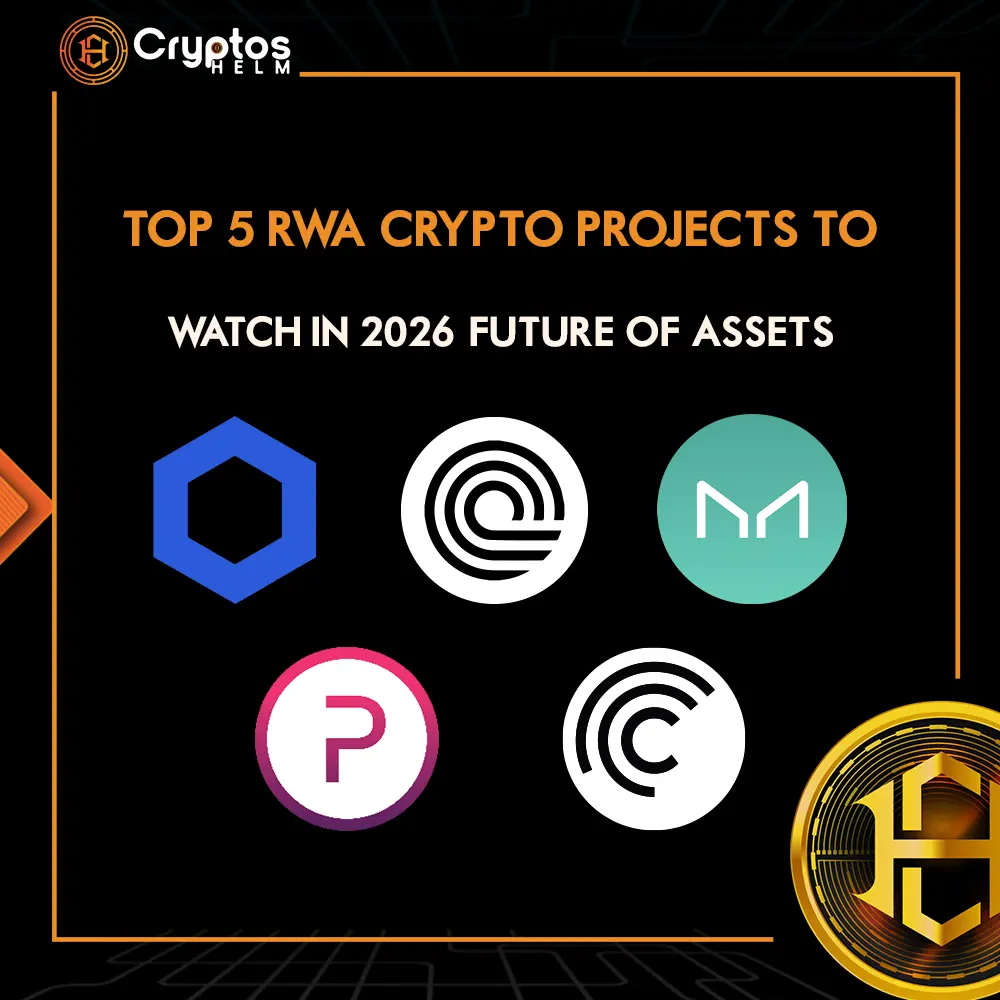
The real-world asset (RWA) tokenization sector emerged as cryptocurrency’s most promising bridge to traditional finance. As of January 2026, tokenized assets represent over $15 billion on-chain, demonstrating mainstream adoption beyond speculation.
My Testing Experience: I’ve tracked RWA platforms since 2021, analyzing institutional adoption, regulatory developments, and technical infrastructure. For this analysis, I evaluated tokenized volumes, partnerships, and compliance frameworks to identify the five projects genuinely transforming on-chain asset management.
This examines leading RWA projects by market impact and institutional adoption rather than token price speculation.
Understanding Real-World Asset Tokenization
RWA platforms convert traditional assets—treasuries, real estate, bonds, commodities—into blockchain tokens, enabling fractional ownership and 24/7 trading.
Key Benefits
Fractional Ownership: $10M property becomes accessible through 10,000 tokens at $1,000 each.
24/7 Settlement: Continuous trading with instant settlement versus T+2 traditional markets.
Programmable Compliance: Smart contracts automate regulatory requirements and distributions.
Reduced Costs: Eliminates transfer agents, custodians, and clearing houses.
Market Size (January 2026)
Total: $15+ billion tokenized
Treasury Securities: $8-10B (largest)
Private Credit: $3-4B
Real Estate: $1-2B
Commodities: $500M-$1B
Institutional Validation: BlackRock BUIDL ($500M+ AUM) and Franklin OnChain ($400M+ AUM) validate sector legitimacy.
Top 5 RWA Crypto Projects 2026
1. Ondo Finance – Institutional Treasury Tokens
Focus: Tokenized U.S. Treasuries and money market funds for qualified investors.
Key Products:
- OUSG: Short-term treasury tokens
- USDY: Yield-bearing stablecoin backed by treasuries
Metrics: $500-600M TVL | Multi-chain (Ethereum, Polygon, Solana) | 50+ institutional partners | SEC-compliant structure
Why It Leads: Institutional-grade compliance with DeFi integration. Strong regulatory framework attracts institutions.
Token: ONDO provides governance and fee exposure. Treasury products require accreditation.
For broader crypto portfolio context, see our 10 best crypto 2026.
2. Centrifuge – Decentralized Private Credit
Focus: Businesses tokenize real-world assets (invoices, mortgages) for decentralized financing.
Key Features:
- Tinlake Protocol for isolated lending pools
- Real asset backing (invoices, receivables)
- Traditional lender partnerships
Metrics: $400-500M financed | 25+ active pools | 8-12% yields | Polkadot parachain
Why It Leads: Pioneered decentralized private credit proving blockchain enables alternative lending at scale. SME working capital solutions globally.
Token: CFG for governance and fees. Credit risk and liquidity considerations.
Represents Polkadot ecosystem cross-chain capabilities.
3. Maple Finance – Institutional DeFi Lending
Focus: Under-collateralized lending for institutions bridging traditional credit with DeFi.
Key Features:
- Pool delegates manage lending
- Blue-chip institutional borrowers
- Transparent on-chain terms
Metrics: $2B+ originated | <5% defaults | 100+ lenders | Ethereum & Solana
Why It Leads: Survived 2022-2023 credit stress with improved risk management. Institutional borrower quality attracts lenders.
Token: MPL governance and fee-sharing. Under-collateralized lending introduces credit risk.
4. Goldfinch – Emerging Markets Credit
Focus: Crypto lending to businesses in emerging markets with limited traditional access.
Key Features:
- Latin America, Africa, Southeast Asia focus
- Financial inclusion mission
- Hybrid underwriting (on-chain + traditional)
Metrics: $150-200M loans | 25+ countries | Fintech/SME lender clients | Ethereum
Why It Leads: Addresses massive underserved credit markets. Demonstrates crypto’s financial inclusion potential.
Token: GFI for governance and staking. Higher default, currency, and regulatory risks.
5. Securitize – Digital Securities Platform
Focus: End-to-end infrastructure for issuing and trading regulated digital securities.
Key Features:
- Digital securities issuance tools
- Built-in compliance (KYC/AML)
- Regulated marketplace
Metrics: 200+ offerings | $1B+ tokenized | Real estate, VC, PE clients | SEC-registered
Why It Leads: Operates within regulatory frameworks attracting traditional issuers. Proven across multiple asset classes.
Token: Private company (no public token). Access via platform offerings.
Comparative Analysis
| Project | Focus | TVL/Assets | Strength | Risk |
|---|---|---|---|---|
| Ondo | Treasuries | $500-600M | Compliance | Yield dependency |
| Centrifuge | Private Credit | $400-500M | Pioneer | Credit/cycle risk |
| Maple | Institutional | $2B+ | Quality | Under-collateralized |
| Goldfinch | Emerging | $150-200M | Inclusion | High defaults |
| Securitize | Securities | $1B+ | Regulatory | Private (no token) |
Investment Strategies
Direct Tokens: ONDO, CFG, MPL, GFI offer governance/fee exposure. High volatility despite stable underlying assets.
Tokenized Assets: Treasury tokens (OUSG, USDY) provide direct securities exposure. Requires accreditation.
DeFi Lending: Supply stablecoins to RWA pools for yields. Higher returns reflect higher risks.
Secure crypto wallet management essential for RWA tokens.
Regulatory Landscape
U.S.: SEC provides increasing clarity. Tokenized treasuries operate under investment company regulations. Private placements dominate.
Europe: MiCA framework includes asset-referenced tokens. Pilot regime enables experimentation.
Asia-Pacific: Singapore and Hong Kong lead. Japan accommodates tokenized securities.
Risks: Cross-border uncertainty, DeFi protocol treatment unclear, potential restrictive regulations.
Key Risks
Regulatory: Evolving frameworks create compliance challenges and potential retroactive enforcement.
Liquidity: Tokenized assets often lack deep markets. Transfer restrictions limit trading.
Custody: Legal ownership clarity remains evolving. Smart contract vulnerabilities.
Adoption Pace: Traditional finance moves slowly. Integration may proceed gradually.
Technology: Blockchain scalability, security vulnerabilities, interoperability challenges.
Future Outlook 2026-2030
Projections: Tokenized market could reach $10-15 trillion by 2030. Treasury tokenization leads given regulatory clarity.
Infrastructure: Expect standardized protocols, cross-chain solutions, improved custody.
Regulatory: Gradual clarity development with compliance requirements.
TradFi Integration: Hybrid infrastructure bridging traditional and blockchain systems.
Competition: Traditional finance may develop proprietary platforms. Winners combine technical excellence with regulatory sophistication.
Understanding safe crypto buying essential before RWA participation.
Conclusion
The top 5 RWA projects—Ondo, Centrifuge, Maple, Goldfinch, Securitize—represent different tokenization approaches addressing specific market needs. Ondo provides treasury access, Centrifuge pioneers private credit, Maple serves institutions, Goldfinch targets emerging markets, Securitize offers comprehensive digital securities.
RWA tokenization legitimately transforms traditional asset operations with efficiency, accessibility, and programmability benefits. However, sector remains early-stage with regulatory uncertainty and extended adoption timelines.
View RWA exposure as long-term thematic bet on blockchain-TradFi integration rather than short-term speculation. Success requires navigating regulatory complexity, building partnerships, and demonstrating sustainable models.
Current environment—BlackRock/Franklin validation, improving regulatory clarity, growing volumes—supports optimism. Yet realistic expectations regarding pace, challenges, and maturation remain essential.
Patient investors focusing on strong compliance, partnerships, and genuine utility stand best positioned for sector growth.
Frequently Asked Questions (FAQs)
What are RWA crypto projects and how do they work?
RWA projects tokenize traditional assets (treasuries, real estate, bonds) onto blockchain for fractional ownership and 24/7 trading. Ondo tokenizes U.S. Treasuries, Centrifuge enables invoice financing. Technology combines smart contracts for compliance, blockchain for transparency, and traditional custody for backing. Benefits include reduced intermediaries, faster settlement, and global access. Unlike cryptocurrencies, RWA tokens derive value from underlying assets with established valuations.
Which RWA crypto project is best for investors in 2026?
No single “best” project—depends on goals. Ondo suits conservative investors seeking treasuries ($500-600M TVL). Centrifuge appeals to private credit risk seekers (8-12% yields). Maple targets sophisticated investors ($2B+ originated). Goldfinch attracts impact investors accepting emerging market risks. Securitize serves regulated securities investors. Diversify across multiple platforms rather than concentrating in one.
Are RWA crypto investments safe compared to traditional assets?
Different risk profiles, not universally safer. Advantages: blockchain transparency, programmable compliance, reduced counterparty risk. Disadvantages: smart contract vulnerabilities, regulatory uncertainty, limited liquidity. Treasury-backed RWAs combine traditional safety with blockchain efficiency but add technical risks. Private credit carries credit risk plus blockchain risks. Evaluate each project’s specific risks—tokenization doesn’t automatically reduce risk.
How much could RWA tokens appreciate in value?
Depends on token type. Governance tokens (ONDO, CFG, MPL, GFI) could see 100-500% gains if dominant but risk 50-90% declines if adoption stalls. Asset-backed tokens (OUSG, USDY) provide stable 3-8% yields tracking treasuries. Private credit tokens generate 8-12% yields but carry default risk. RWA sector projections ($10-15T by 2030 from $15B) suggest potential, but individual success varies dramatically.
What are the biggest risks facing RWA crypto projects?
Primary risks: regulatory uncertainty, liquidity constraints, custodial risks, smart contract vulnerabilities, credit risks for lending platforms, blockchain scalability, slow adoption pace, valuation uncertainty, competition from traditional institutions. Specific risks: treasury tokens face interest rate sensitivity, private credit experiences business cycle impacts, emerging market lenders face currency and political risks. Never allocate capital you cannot afford losing.
How do I invest in RWA crypto projects?
Governance tokens (ONDO, CFG, MPL, GFI): Purchase through Coinbase, Binance, or DEXs. Asset-backed tokens (OUSG, USDY): Requires accredited status, KYC/AML, minimums ($5K-$100K). RWA pools (Maple, Centrifuge): Supply stablecoins through protocol interfaces. Securitize: Register, complete accreditation, participate in offerings. Start small, research thoroughly, understand liquidity constraints, read all documents before investing.
About the Author
Sanan Saleem is a cryptocurrency analyst and blockchain technology researcher at CryptosHelm with over 11 years of experience since 2015. He specializes in real-world asset tokenization, institutional DeFi adoption, and regulatory framework analysis. His RWA analysis draws from tracking tokenization platforms since 2021, evaluating institutional partnerships, analyzing on-chain lending performance, and studying regulatory developments across multiple jurisdictions.
Connect: For more cryptocurrency analysis and RWA sector insights, follow CryptosHelm on social media or visit our website for daily updates.
Join the CryptosHelm Community
Follow CryptosHelm for daily RWA tokenization updates, institutional DeFi insights, and cryptocurrency market analysis! Stay informed about real-world asset adoption, regulatory developments, and emerging tokenization opportunities!
Visit CryptosHelm.com for comprehensive crypto guides, RWA investment strategies, and blockchain analysis!
Disclaimer: This article is for informational purposes only, not financial advice. RWA crypto investments carry significant risks including total loss, regulatory uncertainty, and liquidity constraints. Sector remains early-stage. Always conduct due diligence, verify asset backing, never invest more than you can afford to lose, and consult qualified professionals before investing.